Op-Ed: Green-Energy Benefit Debunked - Fossil Fuels are Cheaper than Renewable Energy, and the Facts Prove It

Over the past decades, I’ve seen hundreds of stories and reports claiming solar and wind power are cheaper than conventional sources of electric power. Those stories were false.
A little more than two decades ago, when the government first got in the business of pushing renewable energy in the form of wind and solar power, later with battery backup, the public was told these were infant or orphan technologies that needed a boost to help them compete with traditional sources of electric power — reliable generating sources like coal and natural gas that were developed and came to dominate without government support.
This was a lie, and the proof is all around us.
Wind and solar are not new or untested technologies. Wind turbines have been around for hundreds of years, and the first solar panel was created in 1883.
They couldn’t compete then, except for specialized uses and isolated locations, and they can’t compete today. Also, wind and solar remain weather- and time-of-day dependent.
As more wind and solar have been added to the grid, it has become less stable, leading to increasing numbers of blackouts. This is why, absent government mandates and support, they never took off as grid-ready electric power sources.
Wind and solar power are enormously profitable, not because they can compete in the market, but due to governments granting developers a guaranteed rate of return for construction — the bigger the project, the greater the profit.
In this politicized environment, profits do not serve as evidence that the market is choosing wind and solar because they are cheaper or more reliable.
A recent article titled “The States Where Renewable Energy Is Now Cheaper Than Fossil Fuels” accurately points out that solar and wind are the fastest-growing electric power sources in the United States over the past few years, but falsely attributes this success to them being cheaper than coal and natural gas. Again, they are not.
A peer-reviewed study in the journal Energy, accounting for all the up-front and hidden costs of competing power generation sources, allows an apples-to-apples comparison of affordability.
The Levelized Full System Costs of Electricity, or LFCOE, of competing grid power sources, accounts for subsidies, production tax credits, additional transmission lines, backup power, and other state and federal programs incentivizing renewables.
On an LFCOE analysis, solar energy is 10 times more expensive than natural gas and more than four times more expensive than coal.
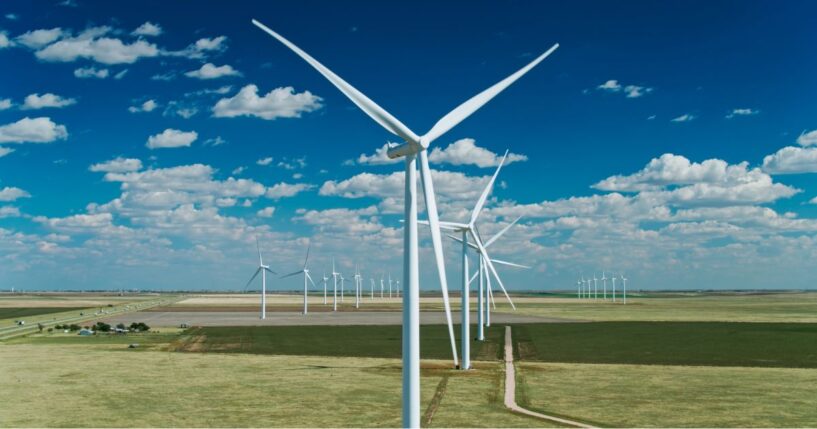
Wind? Well, it’s cheaper than solar, but still comes in at nearly six times more expensive than natural gas, and more than three times more expensive than coal. And that’s in wind- and solar-friendly Texas, where the LCFOE for new natural gas is $40 per megawatt hour, or Mwh, and coal is $90 Mwh, compared to $291 Mwh for wind and $413 Mwh for solar.
Texas serves as a particularly salient example of the high cost of wind and solar. Two decades ago, Texas had among the lowest electric power rates in the nation, and ratepayer prices were declining under competition. Texas has abundant coal and natural gas, which was reflected in the state’s low rates.
Stricter federal regulations forced premature closures of coal power plants. As a result, coal generation declined by half over the past decade, to be replaced by wind, which tripled, and solar, which, due to generous government support, expanded by 800 percent in Texas since 2019 alone.
Texas ratepayers now experience more outages, energy emergencies, and calls for conservation than ever in the state’s history, including during the winter, historically the state’s time of lowest demand.
Meanwhile, electric power rates have skyrocketed. In 2005, Texas had the cheapest electric power rates in the region and among the lowest rates in the country.
Since then, as ever more “cheap” wind and solar have been added to the grid, Texans’ electricity rates have risen steeply. Texas now has the most expensive power in the region and ranks among the states with the fastest-rising electric power costs across the nation.
On Saturday, Jan. 24, at 11 a.m., I checked the Electric Reliability Council of Texas’ grid and market condition dashboard.
At that time, solar, which accounts for 19.5 percent of the state’s monthly electricity capacity, was producing 2 percent of the power, and wind, 22 percent of Texas’ capacity, accounted for about 20 percent.
By contrast, coal, just 7.5 percent of the state’s capacity, was carrying more than 13 percent of the state’s power load.
A few days later, at 3 p.m. on Tuesday, Jan. 27, solar was doing better, accounting for 35 percent of the state’s energy load, which was a blessing, since wind power, the second-largest source by capacity, was only producing 6.3 percent of the power.
That’s less than nuclear, which accounts for 9 percent of the state’s power supply, despite representing just 2.8 percent of capacity.
And good old coal, the supposedly moribund power source, according to renewable profiteers, was producing more than double wind’s supply at 16.8 percent.
Also, the much-vaunted battery backup, which makes up 9.8 percent of the state’s capacity — nearly equal to coal and nuclear combined — was drawing power from the system. When the sun sets, those batteries must be recharged.
The state’s battery backup was also drawing power from the grid on Jan. 24 when I checked, as the state was in a power emergency and homeowners and businesses were told to conserve energy.
Ideologues in academia, the mainstream media, and government should stop misleading the public with fairy tales of cheap electricity from solar and wind.
Data from the Energy Information Administration clearly demonstrate that states that remain largely dependent upon coal or hydropower have among the lowest residential, commercial, and industrial electric power rates in the nation.
By contrast, states with rising renewable energy mandates and subsidies have among the highest and fastest-rising energy costs.
What was true 50 years ago, 30 years ago, and 20 years ago remains true today. As more renewables are added to the grid, customers should expect higher (and faster-rising) electricity bills and more blackouts.
That’s the truth politicians should acknowledge every time they pontificate about affordability. They created the energy affordability crisis, and they can solve it, but only if they abandon their virtue-signaling green fantasies.
The views expressed in this opinion article are those of their author and are not necessarily either shared or endorsed by the owners of this website. If you are interested in contributing an Op-Ed to The Western Journal, you can learn about our submission guidelines and process here.
Truth and Accuracy
We are committed to truth and accuracy in all of our journalism. Read our editorial standards.
Advertise with The Western Journal and reach millions of highly engaged readers, while supporting our work. Advertise Today.