


As an able-bodied Christian, it’s actually quite easy for me to say that I’m opposed to assisted suicide.
God made us in His image, giving us dignity and beauty. Why would I ever want to see that snuffed out early — or more alarmingly, why would I ever want the government to decide when to snuff us out early?
But, again, I’m relatively healthy, a few extra pounds around the waist notwithstanding. Assisted suicide laws are something of an abstraction to me.
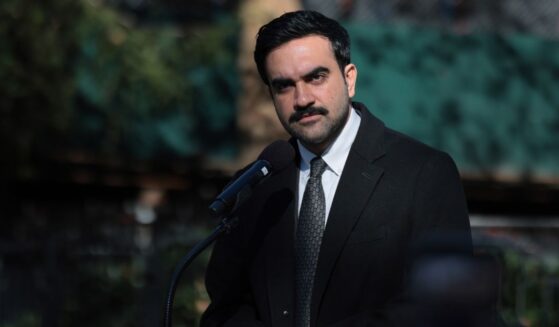
There is nothing abstract about those laws for Jason J. McGuire, president and CEO of the Christian and conservative New York Families Foundation and New York Families Action.
McGuire is battling Stage IV colorectal cancer, and it does not look great for the Christian leader.
In an article for World News Group, entitled, “Why I will quietly decline,” McGuire opened up about coming to grips with his mortality — and why he’ll still never accept the indignity of assisted suicide.
“My prognosis places me among those eligible under New York’s assisted-suicide law,” McGuire wrote. “After spending more than a decade opposing the law in Albany, I now understand this debate in a way I never wanted to.”
“Cancer has also taught me about suffering,” McGuire continued. “I do not romanticize it. There is nothing beautiful about pain, exhaustion, bowel obstructions, hospital stays, or frightening conversations with physicians. I have earnestly prayed for healing and asked God for more years — many more, if He is willing.”
“But my Christian faith has never promised me a life free from suffering. It has given me something better: the assurance that suffering need not be meaningless.”
And that is the beautiful heart of the matter.
There’s also one major reality McGuire says he has learned from cancer.
“Cancer has also confronted me with the limits of autonomy,” McGuire wrote. “Our culture prizes control — over our bodies, our circumstances, and, increasingly, the timing and manner of our deaths. I understand the appeal better than I once did.”
“There is very little about advanced cancer that feels within my control. I cannot command my cancer to stop growing. I cannot guarantee that treatment will succeed. I cannot guarantee tomorrow.”
“But losing control has not meant losing dignity,” he added.
“Dependence is not indignity. Weakness does not erase purpose.”
“My worth does not rise when I am strong or diminish when I am sick. It is not measured by what I produce, how independently I live, or by how many healthy days remain.”
“My life has value because God gave it to me. And a gift does not cease to be a gift merely because it becomes difficult to carry.”
“I don’t know where this road will lead. Perhaps treatment will give me more time. Perhaps my earthly life is much closer to its end than I want it to be.”
This is how he ended his beautiful piece, which is well worth a read for any Christian: “Tomorrow belongs to God.”
Signing you in…
Please keep this page open. The results will appear here.
Check your email to count your vote
We sent a confirmation link to .
Click Confirm Your Vote in that email to count your vote and unlock the results.
Your vote has not been counted yet. If the email hasn't arrived, check your spam or junk folder.
“So, when New York offers me the opportunity to hasten death, I will quietly decline.”
“And if tomorrow comes, I will receive it as the gift it is.”
There’s something profoundly humbling about a man facing his own mortality with this sort of clarity.
McGuire isn’t speaking about suffering from the comfort of a hypothetical debate. He’s living it, enduring the physical pain and emotional anguish that come with a devastating diagnosis.
And yet, even as cancer strips away so much of what he once took for granted, McGuire refuses to surrender the one thing his disease cannot touch — his God-given dignity.
That’s also what makes his testimony such a powerful challenge to the arguments surrounding assisted suicide.
When society begins treating death as a solution to suffering, it risks sending a troubling message to the sick, elderly, and disabled: That lives marked by dependence are somehow less worth living. That needing help makes someone a burden rather than a blessing.
To be clear, compassion for those suffering through terminal illnesses is certainly commendable. Nobody should be expected to celebrate excruciating pain or endure it without proper medical care.
But there’s a world of difference between alleviating suffering through compassionate treatment and deliberately ending the life of the person who is suffering.
I pray that McGuire gets the healing and additional years for which he’s asking God.
But whatever tomorrow holds for him, his testimony offers a reminder that transcends this particular political debate: Human dignity is not something we earn through strength, health, or independence.
It is something we possess simply because we are created in God’s image. And no diagnosis, no disability, and certainly no government can take that away.