Anchored Oil Tanker Hit by Strike as Iran Begins Targeting Some of World's Most Critical Oil Infrastructure

Iran launched vicious attacks Tuesday on oil-producing Arab neighbors, hoping to drive up oil prices to outlast the United States and Israel.
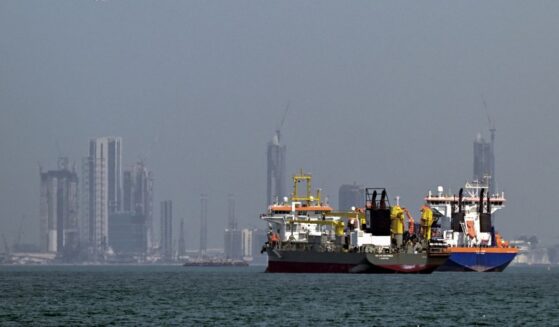
An anchored tanker was struck off the coast of the United Arab Emirates just south of the Strait of Hormuz, according to The New York Times. The tanker sustained minor damage.
The port of Fujairah is strategically important because it is the terminus of a pipeline that can move oil to tankers from inland wells without passing through the strait, which Iran has closed to shipping.
At least 17 ships have been attacked in or near the strait since the U.S. and Israel began fighting Iran in late February.
The UAE was also attacked Tuesday by Iranian missiles and drones. The nation’s defense ministry said the attacks were being repelled.
Iran also launched drones at the UAE’s Shah gas field. Operations were later suspended, according to CNBC.
As noted by The Guardian, oil prices rose after the attacks.
As of Tuesday morning Eastern time, oil prices were up 3 percent on the day and 50 percent since the war began.
The damage Iran is doing to its neighbors is pushing them to call on the United States to thoroughly stomp Iran so that it cannot threaten their economies again, according to Reuters.
“There is a wide feeling across the Gulf that Iran has crossed every red line with every Gulf country,” Abdulaziz Sager, chairman of the Saudi-based Gulf Research Center, said.
“At first we defended them and opposed the war,” he said. “But once they began directing strikes at us, they became an enemy. There is no other way to classify them.”
A Gulf source said the Gulf nations want the United States to knock Iran down so hard and so far that it cannot rise again to be an offensive threat.
“If the Americans pull out before the task is complete, we’ll be left to confront Iran on our own,” Sager said.
A White House representative said President Donald Trump was “in close contact with our partners in the Middle East.”
Secretary of War Pete Hegseth said last week that Gulf nations were “stepping up even more” and would “go on the offense.”
Sager said Saudi Arabia would be likely to get involved if Iran strikes major oil facilities.
“Now that Iran has shown it can shut down Hormuz, the Gulf faces a fundamentally different threat,” Bernard Haykel, professor of Near Eastern studies at Princeton University, said. “If it’s not addressed, this danger will be long-term.”
Truth and Accuracy
We are committed to truth and accuracy in all of our journalism. Read our editorial standards.
Advertise with The Western Journal and reach millions of highly engaged readers, while supporting our work. Advertise Today.