Who Would Have Guessed? Transit Agency in Cold-Weather State Buys EV Buses, Can't Use Them in Freezing Cold

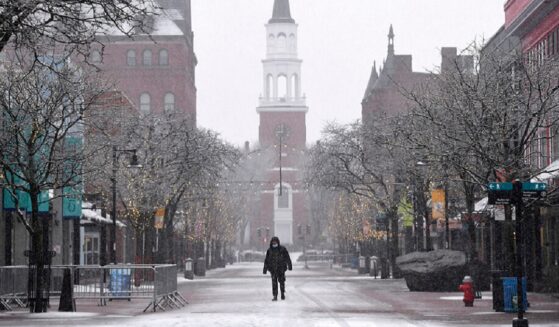
And today in obvious thing happens to obvious people for obvious reasons: A city in Vermont, one of the coldest states in our nation, is having trouble providing public transit because the EV buses the city bought to do the job can’t charge in the cold.
According to the conservative website The Center Square, the buses purchased at the cost of millions for Burlington’s Green Mountain Transit can’t charge below 41 degrees. Thus, at least five of the vehicles in the fleet are out of service in the state’s largest public transportation agency.
Even more reassuring: Federal grants, which means your money, paid for the vehicles!
According to the Center Square’s report Saturday, the problem lies in the fact that the buses, manufactured by the Canadian firm New Flyer and acquired last spring, must be charged outdoors due to safety issues with their batteries.
However, there are no replacement batteries ready yet — and the software on the buses also updated when the recall was issued to “decrease the likelihood for fire.”
This “included only allowing the bus to charge to 75 percent and to not allow charging when the battery is below 41 degrees,” a Green Mountain Transit official said.
General Manager Clayton Clark told The Center Square that “the federal government provides public transit agencies with new buses through a competitive grant application process, and success is not a given.”
“From 2020-2024, the [Biden administration’s] priority for grants had been low or no emission vehicles, with grant requests for diesel buses often not awarded,” Clark told the outlet.
“This was part of a concerted effort of the previous administration to accelerate public transits’ migration to replace diesel buses,” he continued. “To be competitive for a grant, GMT … saw electric battery buses as the pathway to get the most new buses.
“Green Mountain Transit’s priority is new buses, regardless of the type,” he added, noting that “electric battery buses are 90 percent paid for by federal and Volkswagen settlement funds.”
(This refers to a settlement between the U.S. government and Volkswagen regarding emissions test tampering on its diesel vehicles.)
Thus, Clark told the outlet, the buses were part of “a three year grant cycle for 19 total electric battery buses,” which will represent the backbone of the new bus acquisitions for Green Mountain Transit.
“In September 2025 we ordered seven additional buses with a 2027 delivery date (but will be delivered with different batteries), and seven more slated for delivery in 2028,” Clark said. “This is the primary source of new buses for the next three years, as we have only three diesel buses anticipated.”
Green Mountain Transit is currently working to share buses with other transit agencies in the state, according to WCAX-TV in Burlington.
Larry Behrens, a spokesman for energy advocacy group Power the Future, said this looked worse to him, saying the acquisition was “beyond the point where this looks like incompetence and starts to smell like fraud.”
“When government rushes money out the door to satisfy green mandates, basic questions about performance, safety, and value for taxpayers are always pushed aside,” Behrens said. “Americans deserve to know who approved this purchase and why the red flags were ignored.”
And red flags include, well, stuff like this:
EVs do have a tendency to spontaneously combust, at least more than internal combustion vehicles. And when they do, the fire is more difficult to put out.
So they clearly can’t be charged indoors, which has led Clark to say he wants an update from the company allowing the buses to charge under 41 degrees.
“Since the barrier to charging under 41 degrees is simply a software update, the manufacturer could find a technical solution that could resolve the problem this week,” Clark said. “We are seeking a financial remedy from New Flyer that could lead to litigation if not resolved.”
“New Flyer has indicated that replacement batteries will be installed within 18-24 months,” he added.
The problem is, of course, that both range and reliability of EVs is reduced in the cold; it’s unclear precisely what the problem with the batteries is, but cold weather — and charging in cold weather, specifically — might exacerbate it. What’s worse, these problems might persist for up to two years.
So, instead of reliable diesel buses acting as public transit, Vermonters might have to spend their winters either traveling by car or not going anywhere at all, thanks to meddling bureaucrats in Washington and sub-zero common sense among green do-gooders and blue-state apparatchiks. (Maine has been under unified Democratic control over the governor’s office and state legislature since 2019.)
Nice work, all around, really.
Obviously.
Truth and Accuracy
We are committed to truth and accuracy in all of our journalism. Read our editorial standards.
Advertise with The Western Journal and reach millions of highly engaged readers, while supporting our work. Advertise Today.