And We Thought Fruitcake Was Bad: Italian Company Is 3D Printing 'Pastries' That Are Made of Truly Gross-Sounding Ingredients

One of the great food mysteries of the world is how fruitcakes ever became specialty of Christmas — ostensibly a time of peace and unity.
The dense and heavy dessert is usually cloyingly sweet, and the fruit in it never tastes fresh.
And that’s to say nothing about the odd texture (to put it kindly) of mass-produced fruitcakes.
Another great food mystery? Who in the world is going to eat 3D-printed “pastries”?
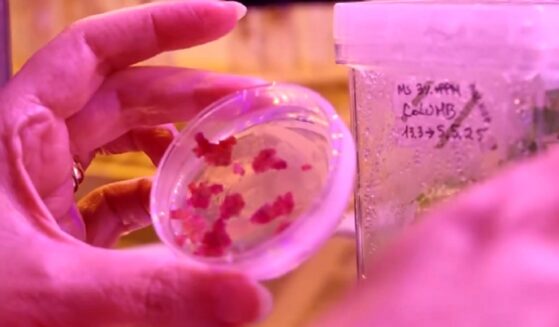
According to Reuters: “Scientists in Italy are developing sweet snacks with lab-grown plant cells and fruit residues, producing a material that a 3D printer can then process into ‘pastries’ with high nutritional content.”
“Lab-grown plant cells”? “Fruit residues”? Are scientists from the country that brought us pasta, pizza and tiramisu really making “pastries” with stuff you could find in a laboratory dumpster?
Apparently, and they look about as appetizing as they sound:
Scientists in Italy are developing sweet snacks with lab-grown plant cells and fruit residues, producing a material that a 3D printer can then process into ‘pastries’ with high nutritional content https://t.co/Q49lEmX8WP pic.twitter.com/JO2idjXPeg
— Reuters (@Reuters) December 15, 2025
Even beyond the questionable aesthetics, there are a number of very valid health concerns with 3D-printed “food,” according to Sustainable Futures Training, an international consulting firm.
First, given the amount of raw materials that 3D-printed “food” handles — such as dough or pureed food — there’s an inherent risk with all sorts of bacterial contamination.
Second, here’s a doozy from Sustainable Futures Training: “Unlike traditional cooking, 3D printing involves multiple ingredient cartridges that can introduce cross-contamination risks, especially if the printer is used for different food types without proper cleaning protocols. This is a significant concern for people with food allergies.”
Nothing like some cross-contamination to go with your croissant.
Third, the fact that you’re making food with a complex nozzle and “cartridge systems” means that that equipment must be thoroughly cleaned to prevent residue from building up. It’s very easy to see how microbial growth could explode in these circumstances.
“Without proper sanitation procedures, foodborne illnesses could become a serious issue,” Sustainable Futures Training notes.
Beyond the above risks, it’s also worth pointing out that one of the reasons for this push for 3D-printed “food” appears to be built on a false premise.
One of the alleged upsides to 3D-printing this stuff is that it will help conserve arable land. The problem with that is that, according to the world statistics site IndexMundi, the amount of arable land across the globe has largely been stable over the last 30 years.
(Arable land could most simply be described as land that can be used to grow crops.)
So these 3D-printed snacks — from the health risks to the premise — are pretty dumb.
It also can’t be stressed enough in a MAHA world: Printed “pastries” from petri dishes and the apple core my dog dragged into the house last week isn’t something any civilized people should eat.
Though, when you put it like that — and if cost can be managed — this might not be a bad alternative for prison food. That’s actually a pretty funny idea.
But for free Americans? Never.
Truth and Accuracy
We are committed to truth and accuracy in all of our journalism. Read our editorial standards.
Advertise with The Western Journal and reach millions of highly engaged readers, while supporting our work. Advertise Today.