How Chinese EVs Coming from Canada May Impact US National Security

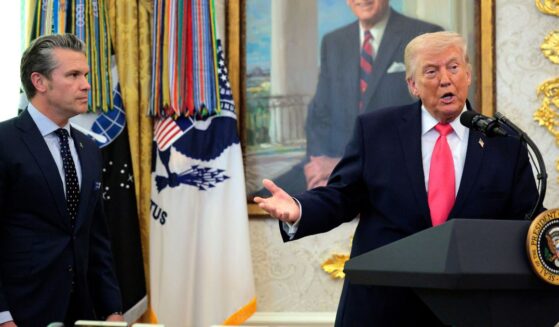
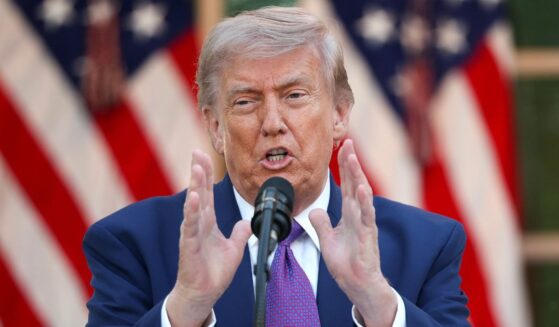
Amid President Donald Trump’s visit with senior Chinese leaders in Beijing, some automotive and national security experts urged him to avoid lifting restrictions on the communist nation’s electric vehicle exports.
Trump and other administration officials are expected to discuss trade policy with the Chinese government, prompting renewed warnings about the possible economic and security impacts of letting more Chinese cars into American markets.
Fox Business noted that Ohio Republican Sen. Bernie Moreno said the vehicles “have lots of remote cameras,” meaning they could “send back data to the Communist Party” and even be “remotely controlled.”
Moreno also described the cars as “little Trojan horses.”
Gordon Chang, a senior fellow with the Gatestone Institute, said in an interview with Fox Business that Canada lowering tariffs on Chinese cars could likewise enable more of them to enter the United States.
Electric vehicles have been widely adopted in China, but despite growing global interest in the innovative sector, Chinese electric cars remain out of reach for consumers in the world’s second-largest auto market, the U.S. https://t.co/2kWMkwYc47
— NBC News (@NBCNews) May 13, 2026
“We should not allow Canadians to drive their Chinese EV across our border into our country because China will be able to surveil the United States with the Canadian cars,” he said.
Chang similarly described the electric vehicles as “rolling spy machines.”
Sandy Baruah, president of the Detroit Regional Chamber, and Glenn Stevens Jr., the executive director of MichAuto, meanwhile wrote in an opinion piece for The Detroit News that allowing more Chinese vehicles would flood the nation with “software-infused vehicles” posing a “national security threat to America.”
“When it comes to the future of the U.S. automotive industry and its critical contribution to innovation, manufacturing prowess, employment and national security interests, Americans need to rally around the idea that having and supporting a robust and competitive auto and next-generation mobility industry is critical,” the opinion piece added.
Beyond national security concerns, Baruah and Stevens said that loosening trade barriers would let the vehicles “quickly gain considerable market share as they have done in Europe, South America, and other markets.”
Electric vehicles have been widely adopted in China, but despite growing global interest in the innovative sector, Chinese electric cars remain out of reach for consumers in the world’s second-largest auto market, the U.S. https://t.co/2kWMkwYc47
— NBC News (@NBCNews) May 13, 2026
Such a move would “devastate the U.S. automotive supply industry and employment base.”
“For over two decades, China has been cunningly building its automotive market with vast state subsidies, uncompetitive labor practices and the monopolization of raw materials and refining capacity, to unfairly dominate the global market, not compete in it,” they noted.
China has indeed “entered the global automotive market with unprecedented government support and subsidies,” unlike trade partners in Japan, Korea, and Europe.
“Its government policies have led to significant over production, which results in Chinese-made vehicles being ‘dumped’ at below market prices across the globe — we must not allow that here,” the article noted.
Advertise with The Western Journal and reach millions of highly engaged readers, while supporting our work. Advertise Today.
Truth and Accuracy
We are committed to truth and accuracy in all of our journalism. Read our editorial standards.