US Chopper Spots Speed Boat Carrying 4,000 Pounds of Cocaine – Central American Authorities Seize It All

President Donald Trump’s partnership with Latin American nations has secured another victory.
Last year, Trump issued the “Trump Corollary” to the Monroe Doctrine that included working with Latin American governments to fight back against powerful transnational drug cartels. As noted by The Wall Street Journal, that collaboration is working.
“A sprawling military alliance that reaches from the Caribbean across the Andes to the Pacific is taking shape a year after the Trump administration began bombing alleged drug-smuggling boats in the region,” The Wall Street Journal noted last month.
Tangible evidence of that collaboration emerged last week after a massive haul of drugs was prevented from reaching the United States.
“Another trafficking run shut down through coordinated regional action,” the Joint Interagency Task Force South posted on X.
Another trafficking run shut down through coordinated regional action. 🚨
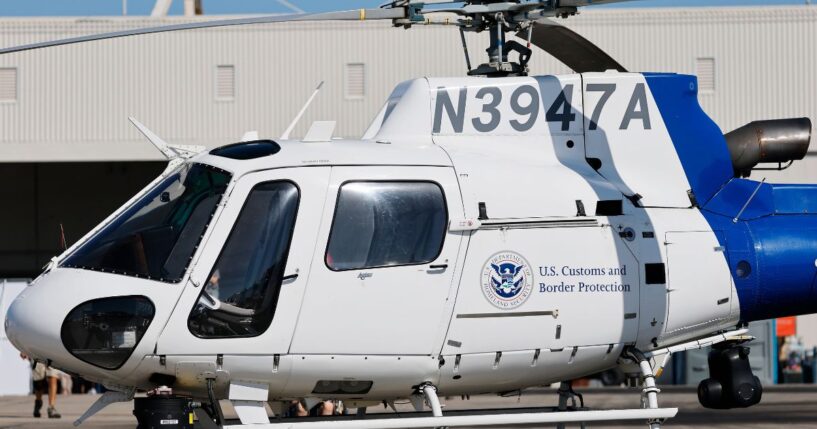
A U.S. Government Maritime Patrol Aircraft (MPA) detected a go-fast vessel and notified Costa Rica, @seguridadcrc, and regional partners. A Costa Rican interceptor was vectored toward the contact, and the MPA handed off tracking to a CBP, @CBP, aircraft before returning to base. The CBP aircraft later handed the contact off to a follow on U.S. Government MPA. Additional partner nation maritime and interceptor assets later reacquired the vessel and gained positive control.
3 persons on board detained.
76 bales seized.
Later confirmed: 1,804 kilograms. 📦🚫@jiatfs detection and monitoring efforts support @DeptofWar directed, @Southcom led operations to detect, disrupt, and dismantle narco-terrorist networks across the Caribbean and Eastern Pacific degrading their illicit operations and protecting the homeland.
#CounterNarcotics #MaritimeSecurity #Interdiction #DrugSeizure #EasternPacific
— Joint Interagency Task Force South (@jiatfs) October 16, 2026
“A U.S. Government Maritime Patrol Aircraft (MPA) detected a go-fast vessel and notified Costa Rica, @seguridadcrc, and regional partners. A Costa Rican interceptor was vectored toward the contact, and the MPA handed off tracking to a CBP, @CBP, aircraft before returning to base. The CBP aircraft later handed the contact off to a follow on U.S. Government MPA,” the post said.
“Additional partner nation maritime and interceptor assets later reacquired the vessel and gained positive control. 3 persons on board detained. 76 bales seized. Later confirmed: 1,804 kilograms,” the post continued.
The amount is equal to just under 4,000 pounds.
“@jiatfs detection and monitoring efforts support @DeptofWar directed, @Southcom led operations to detect, disrupt, and dismantle narco-terrorist networks across the Caribbean and Eastern Pacific, degrading their illicit operations and protecting the homeland,” the post continued.
The recent seizure was not the task force’s first instance of a major bust.
In May, the task force and regional partners seized 1,577 kilograms of cocaine, the task force posted on Facebook.
In September, the Department of Homeland Security noted that the U.S. Coast Guard seized more than 25,000 pounds of cocaine in less than a week and had seized more than 260,000 pounds of cocaine in what’s known as Operation Pacific Viper, a massive effort between the Coast Guard and its partners to prevent drugs from reaching America.
As noted by The Wall Street Journal, the administration may extend the aggressive approach it has used at sea to the soil of partner Central and South American nations.
“Do I see land strikes as options? Yes. We want all options at the table,” Gen. Francis Donovan, head of U.S. Southern Command, said.
“Those actions might be strikes, arrests, or the takedown of a safe house. It could even be something as routine as increasing the use of cargo scanners at border checkpoints,” Donovan said.
To support expanding operations, the Pentagon may deploy MQ-9 Reaper drones to Central and South America.
Donovan said Latin American partners welcome America’s help.
“They are not only fed up, but under immense stress because of the impact these narcoterrorist organizations have had on their societies,” he said.
“The majority of them are willing to employ their military and law enforcement forces to achieve those objectives.”
Advertise with The Western Journal and reach millions of highly engaged readers, while supporting our work. Advertise Today.
Truth and Accuracy
We are committed to truth and accuracy in all of our journalism. Read our editorial standards.