

After a frantic day of U.S. Supreme Court rulings, things got even more frantic over at NPR — and not because of what anyone on the high court did, but what they didn’t do.
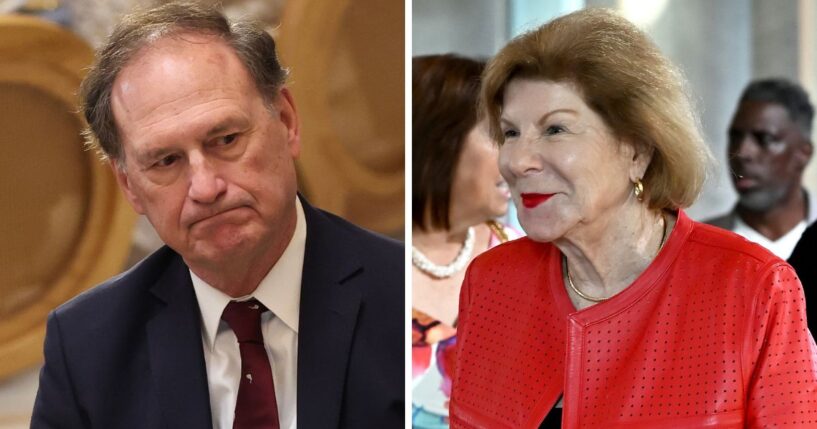
Nina Totenberg, who has been with the network since 1975, has been scrambling to explain how she broke a story that Justice Samuel Alito was retiring, only to discover the story was untrue. The revelation led to a frantic day of finger-pointing at the public radio broadcaster.
Totenberg’s piece on the non-retirement retirement, which was filed at 10:51 Eastern Time and appeared to be extensively pre-prepared, can still be read on several internet archive sites.
In it, Totenberg called Alito “[a] consequential conservative” and a justice who will be remembered chiefly for writing “the Supreme Court’s opinion reversing Roe v. Wade.”
“In the history of the Supreme Court, the names of just a few justices are linked with a single very famous, or infamous decision,” the piece read, noting that “in our own times, Alito’s name is indelibly linked with the court’s opinion overturning a half century’s worth of decisions declaring that women have a right to abortion.”
However, there was a problem: Totenberg’s piece said that the retirement was announced by the court. No such thing had happened, and as of Wednesday, Alito is still an active justice with no announced intention of retiring.
Shortly thereafter, the piece was removed, with a simple editor’s note in its place: “This story has been taken down. It was published in error.”
Signing you in…
Please keep this page open. The results will appear here.
Check your email to count your vote
We sent a confirmation link to .
Click Confirm Your Vote in that email to count your vote and unlock the results.
Your vote has not been counted yet. If the email hasn't arrived, check your spam or junk folder.
Later, a fuller retraction was issued: “Earlier today, we erroneously published a story saying that Supreme Court Justice Samuel Alito was retiring. Neither Alito nor the court’s public information office has announced his retirement, and we have retracted the story.”
Appearing on the network’s “All Things Considered,” the 82-year-old Totenberg was far more apologetic, reading from a prepared letter.
“Dear Justice Alito, there are no words to adequately apologize for today’s error in reporting your retirement. It was entirely my fault. I rushed out of the courtroom after the opinion announced — announcements, and when I realized that the usual rush of folks after a few minutes had not happened, I asked somebody what was going on inside, to which the answer was retirement announcements,” she said, according to The Hill.
“I didn’t hear the ‘s’ on announcements, and assumed something no reporter should ever do, that you were retiring. It was the worst professional mistake of my more than 50 years in journalism. I could go on, but I don’t know what else to say, except that I am so, so sorry.”
However, she didn’t explain how the mistake managed to make it through the editorial process — something that caught the eye of CNN media analyst Brian Stelter.
Totenberg’s on-air apology this afternoon didn’t really explain why NPR published her report without additional confirmation. Did she have some other reason to believe that Alito was preparing to retire? If so, she didn’t say. Here’s my full story… https://t.co/CTNtZXQtSe
— Brian Stelter (@brianstelter) June 30, 2026
In his piece for CNN, NPR editor-in-chief Thomas Evans said “we do have systems in place” to avoid errors like this, but did not explain how the systems failed.
“We are trying to be a nimble news organization during breaking news and still be correct at all times, and this is something we should learn from,” he said.
Stelter also noted that “Tuesday’s incident sparked speculation that Totenberg, who has been well-sourced at the court for decades, might have had some advance knowledge that Alito was about to retire.
“Totenberg did not address that during Tuesday’s mea culpa,” he added.
NPR public editor Kelly McBride, meanwhile, blamed the story on a misheard comment by Chief Justice John Roberts and Totenberg’s failure to check in with Alito’s office before passing on the news to both NPR’s executive editor and an intern who was shadowing her, according to The Desk.
“This sort of s*** should not happen,” executive editor Krishnadev Calamur reportedly told McBride. However, The Desk reported he, too, did not fact-check the Alito retirement story before publishing.
“She’s the preeminent Supreme Court reporter in the courtroom, so I’m assuming that’s what she heard. I’m not waiting to see what the Times is reporting. It’s when Nina says, ‘Here’s what happened,’ and we do it. That’s the trust you build up,” Calamur reportedly told McBride.
Totenberg’s error came on a busy day for the court, which handed down decisions on birthright citizenship, transgender bans in school sports, and campaign finance. However, her long history of reporting on the Supreme Court, combined with what she herself called a “rookie mistake,” took on a life of its own as the day progressed.
While Totenberg has covered the Supreme Court for NPR in some capacity since the 1970s, she’s arguably best remembered for breaking the sexual harassment allegations by Anita Hill against then-nominee Clarence Thomas in 1991. Thomas was ultimately confirmed after testimony from both him and Hill on the matter.
That scandal led to the revelation of Totenberg’s only other major journalistic scandal: During the hearings, The Wall Street Journal uncovered evidence that Totenberg had been fired from the long-defunct National Observer in 1972 for plagiarism.
“I was in a hurry. I used terrible judgment,” she told the Columbia Journalism Review in 1995. “The fact I used so many direct quotes obligated me morally to credit the Post. I should have been punished. I have a strong feeling that a young reporter is entitled to one mistake and to have the holy bejeezus scared out of her to never do it again.”
While rumors have swirled that both Alito — a 76-year-old George W. Bush appointee — and Thomas might leave the court while the Republicans have both the White House and a Senate majority, nothing concrete has emerged that either justice plans to retire.