Op-Ed from Iranian Kurd: Handing Iraqi Kurdistan to Tehran Would Be a Big Mistake

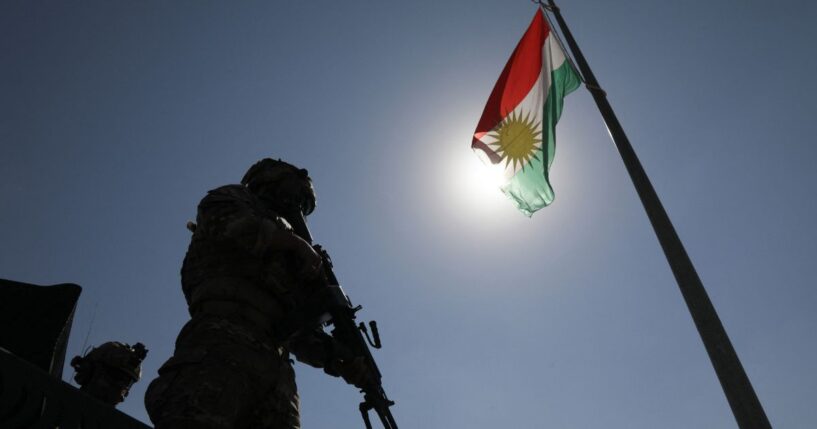
The imminent U.S. military withdrawal from Iraq comes at a sensitive moment for the Kurdistan Region of Iraq, Iranian Kurdish political parties, and thousands of Iranian Kurds living in the KRI.
The central issue is not whether American forces should leave Iraq. It is what security architecture remains after they do — and whether that transition would expose both U.S. national security interests as well as vulnerable communities to a new wave of Iranian attacks.
For decades, the KRI has been the principal political and organizational base of Iranian Kurdish opposition parties, including my Komala Party of Iranian Kurdistan, the Democratic Party of Iranian Kurdistan, and other Kurdish organizations.
Some maintain armed formations that have largely operated in a defensive posture to protect their members and surrounding communities. But describing these organizations simply as political or security entities obscures an important reality: the communities also include families, children, schools, medical centers, places of employment, and everyday civilian life.
These Iranian Kurdish communities have received protection and assistance from United Nations agencies and humanitarian organizations.
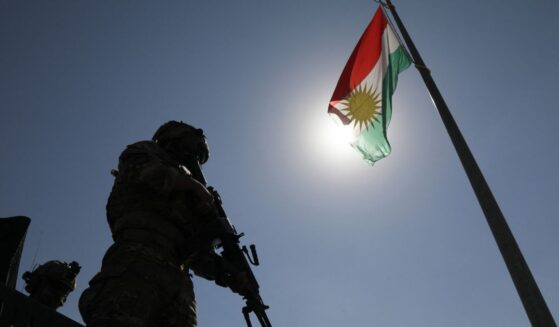
Iranian Kurdish opposition groups played a role in the American and Kurdish efforts against ISIS after the terrorist group’s rise in Iraq in 2014. Komala, among others, fought shoulder to shoulder with U.S. forces against the Islamic State.
Our participation reflected the fact that we were not only political. We also maintained forces that defended the KRI from terrorist organizations.
For several years, Iran has conducted missile, drone, and cross-border attacks against Iranian Kurdish parties in Iraq. The regime’s attacks increased in the past year, including since the U.S. and Iran signed a Memorandum of Understanding to end the war.
These attacks have not always been confined to areas in which Iranian Kurdish forces, in a defensive posture, are based.
In fact, Kurdish human rights organizations have documented Iranian attacks affecting Kurdish party offices and civilian communities, with casualties reported among both political members and civilians.
The attacks intensified this year. A British government 2026 country bulletin reported that Iranian forces had conducted missile and drone strikes against Iranian Kurdish opposition groups based in the KRI.
The United Nations High Commissioner for Refugees also reported that thousands of Iranian refugees and asylum seekers live in Iraq, overwhelmingly in the KRI, and that communities have been affected by regime attacks and displacement.
This makes the scheduled U.S. military withdrawal from Iraq more than a question of military basing only.
If security capabilities deteriorate without adequate capabilities to replace them, a security vacuum will open, and the Iranian regime will fill it in new and dangerous ways.
The U.S. and Iraq have been preparing to end their military mission. Iraqi security institutions, including Kurdish forces, are expected to assume greater responsibility for security.
However, the capabilities associated with a strong military presence as a counterweight to Iran extend beyond troop numbers. Intelligence, surveillance, early warning, air defense coordination, counter-drone capabilities, and access to broader regional security networks cannot be reproduced quickly.
This matters when the principal external threat is a state such as Iran, which possesses ballistic missiles, drones, and other long-range capabilities, and has demonstrated a willingness to conduct cross-border attacks against Iranian Kurdish targets in the KRI.
The lesson of the U.S. military withdrawal from Iraq in 2011 is instructive.
The withdrawal did not create ISIS. However, the security vacuum created by the American withdrawal was the impetus for ISIS to take significant territory in both Iraq and Syria, and it is known that Iran instigated and funded sectarian conflict in the country, which ISIS took advantage of in the name of Sunni disenfranchisement by Iranian-backed Shi’a groups and forces in Iraq.
The U.S. military withdrawal from the KRI raises several interconnected concerns.
First, Iranian Kurdish political parties could become more vulnerable if intelligence sharing, early warning, or air-defense capabilities are reduced. Their own defensive formations cannot be expected to protect civilian communities against Iranian missile and drone attacks.
Second, political pressure on the Iranian Kurdish parties will increase. The Kurdistan Regional Government is trying to balance its relationships with Baghdad and Tehran, and is attempting to keep the KRI from becoming a battlefield in the wider conflict.
A weaker security environment would make that balancing act more difficult and could increase pressure on the KRG to displace Iranian Kurdish communities outside the KRI and into harm’s way.
Third, civilians could bear the greatest risk. Thousands of Iranian Kurdish families have lived in the KRI for decades. Their protection is a humanitarian and a security matter because of their close proximity to Iranian Kurdish opposition groups.
The goal, therefore, is to establish security continuity before the U.S. military withdrawal.
There is a strong case for continued U.S. security engagement in Iraq including the KRI. Given the nature of the threats facing the Kurdistan region, there is also a good reason for the United States to maintain a military presence in it, however small and irregular.
Such a U.S. force can serve a number of purposes, including as a political “tripwire” by keeping everyone in Iraq honest. It should possess special operations, intelligence and surveillance, early warning and air defense coordination, counter-drone capabilities, and rapid response capabilities.
The principle is straightforward: the U.S. should not withdraw critical security capabilities until credible Kurdish alternatives are operational.
Iran has demonstrated that it can reach targets inside the KRI and kill innocent civilians. As that threat remains real, Kurdish countermeasures should be built up with U.S. support and a small American footprint.
Furthermore, the Trump administration should send a strong message to Iran that it will not tolerate cross-border attacks by the regime against any targets in the KRI. Any future attacks must be an American red line.
That American red line serves the U.S. national interest. A stable and secure Kurdistan region remains critical to an American ally, the Kurds of Iraq, just as the same red line would be true for U.S. allies in the Arabian Gulf. A stable KRI serves the broader Iraqi national interest as well.
There are several excellent reasons why the U.S. should not fully withdraw its forces and capabilities from the Kurdistan region of Iraq, and the Trump administration should not make the same mistake its predecessors did in this regard.
A small U.S. footprint and a strong message to the regime in Tehran will make it clear to Iran that it must stop meddling in Iraq.
Salah Bayaziddi is the Representative to the U.S. of the Komala Party of Iranian Kurdistan, a leading Iranian Kurdish political party in opposition to the Islamic Republic of Iran.
The views expressed in this opinion article are those of their author and are not necessarily either shared or endorsed by the owners of this website. If you are interested in contributing an Op-Ed to The Western Journal, you can learn about our submission guidelines and process here.
Advertise with The Western Journal and reach millions of highly engaged readers, while supporting our work. Advertise Today.
Truth and Accuracy
We are committed to truth and accuracy in all of our journalism. Read our editorial standards.