
News

Study Reveals Why Reindeer Are Under Threat

Today’s Western Journal stories in the AI you already use.

Get WJ in AI

Which AI do you use?

Get a short reading list with links to the stories.

Use another app or get help

Copy this request into any AI chat that can read the web. You can also paste it if signing in opens a blank chat.

Create today's Western Journal brief. Pick up to five stories published in the past 24 hours, including Commentary when available. Use my known interests and any topics I picked. If neither is available, choose a broad mix. Read https://www.westernjournal.com/ai-briefing/ first. If unavailable or the snapshot is over 15 minutes old, try https://www.westernjournal.com/ai-briefing.txt, then open https://www.westernjournal.com/llms.txt with ?edition=YYYY-MM-DD-HHMMZ using the current UTC date and minute on each run. Read its inline list through the end marker. If needed, try https://www.westernjournal.com/latest-news/, then the directory’s public story JSON, then https://www.westernjournal.com/feed/, then search site:westernjournal.com. Link each original headline directly to its verified WJ article and say in one sentence why it matters today. Add utm_medium=AI_brief and add utm_source=<the short lowercase name of this AI> if missing. Start your first reply with this exact line: Welcome to The Western Journal AI news and commentary brief! Below is a sample of what your brief might look like based on what your AI already knows about your interests. After the brief, add “Daily delivery options”. If scheduling is available, say “I can set this up to arrive automatically every day.” Offer 6 AM, noon, or 5 PM in my likely time zone, and let me pick another time or zone. Confirm both before saving or updating one daily briefing. Say whether it was saved or scheduling is unavailable. Each run should use these same sources and preferences and deliver just the brief. Use this app’s daily scheduling feature if available.

The Western Journal

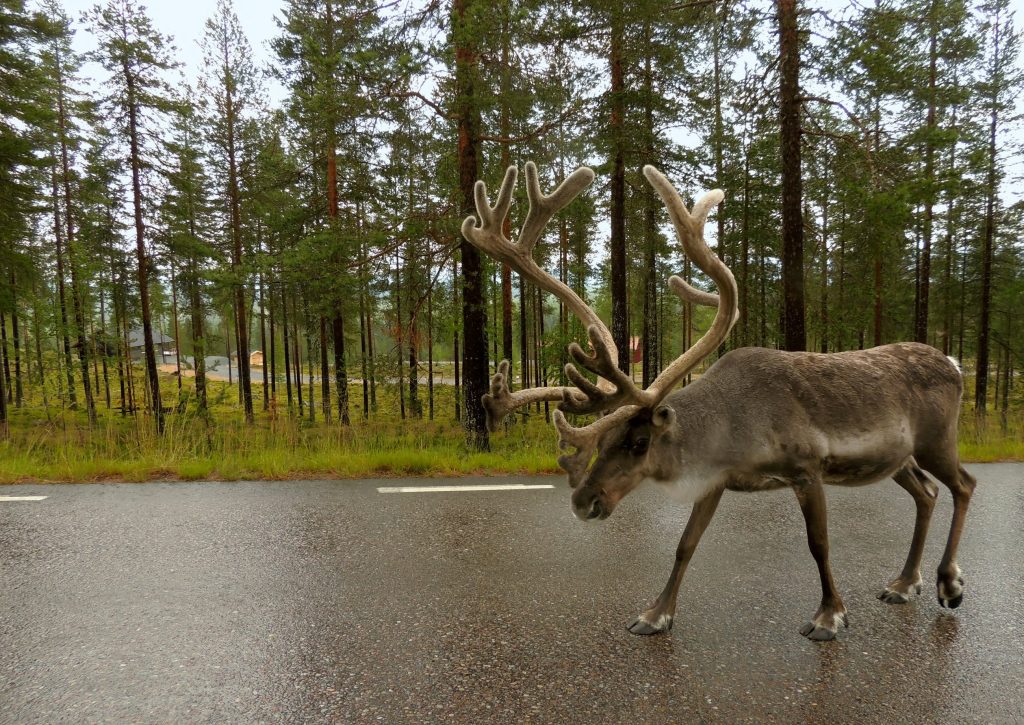
Male reindeer walking on a national road in Jämtland, Sweden.    (Stockholm University via SWNS)

Reindeer in Scandinavia are under threat.

Only four percent of their grazing land remains untouched by human encroachment, a new study reveals.

Intensive forestry, outdoor tourism, road and railway traffic, mining, and wind farms are all contributing to this loss of land.

A reindeer pulling a senior couple on a sleigh
(Altrendo Images via Shutterstock)

The study, published in the journal Scientific Reports, looked at Norway, Sweden and Finland and concluded that around 85 percent of the region is affected by one type of human activity, while 60 percent is exposed to multiple forms of human intervention.

Marianne Stoessel, a Ph.D. student in Landscape, Environment, and Geomatics at Stockholm University, and lead author of the study, said: “In northern Fennoscandia, we are lucky to still have one of the oldest herding systems in Europe, where reindeer can roam freely over 40 percent of Norway, Sweden, and Finland.

“Or at least, they used to. With the rising human presence taking place on multiple fronts, the resilience of northern pastoralism is under threat.”

A young couple taking a baby reindeer for walk
(Altrendo Images via Shutterstock)

Dr. Regina Lindborg, a professor from the department of physical geography and quaternary geology at Stockholm University, co-author of the study and coordinator of the project, said: “Grazing is a key process for maintaining plant biodiversity, even in the mountains.”

“So it was important for us to study the extent of these cumulative pressures with having the summer pastures in mind, where grazing takes place.”

While human interaction is a huge threat to reindeer grazing in the north, they do face other pressures such as predators and climate change.

Related:
Nation's Leading Psychologist Org Seems More Into Watching Drag Queens Dance Than Helping Patients: Scientists
A young couple feeding a baby reindeer
(Altrendo Images via Shutterstock)

Reindeer herders, policymakers, and the scientific community are all aware of the issues.

Ms. Stoessel said: “What is new is that we finally managed to get an overview of these pressures over the whole area.”

“This was not easy, as the different land-uses act at different scales and can be very dynamic, so can be the predators and the effects of climate change on grazing.”

The fear is that these pressures will create a huge change in the landscape and vegetation in this area, minimizing biodiversity and pushing reindeer out of their homes into much smaller grazing areas.
 

Produced in association with SWNS Talker.

The Western Journal has not reviewed this story prior to publication. Therefore, it may not meet our normal editorial standards. It is provided to our readers as a service from The Western Journal.


Choose The Western Journal as your preferred source on Google and never miss reporting that defends truth, protects freedom, and advances Western civilization

Advertise with The Western Journal and reach millions of highly engaged readers, while supporting our work. Advertise Today.

Truth and Accuracy

Submit a Correction →


We are committed to truth and accuracy in all of our journalism. Read our editorial standards.

Tags:

Conversation