Libs Legalized Drugs in Vancouver Then Tried to Backtrack, But It's Now So Bad Even Birds Are Overdosing


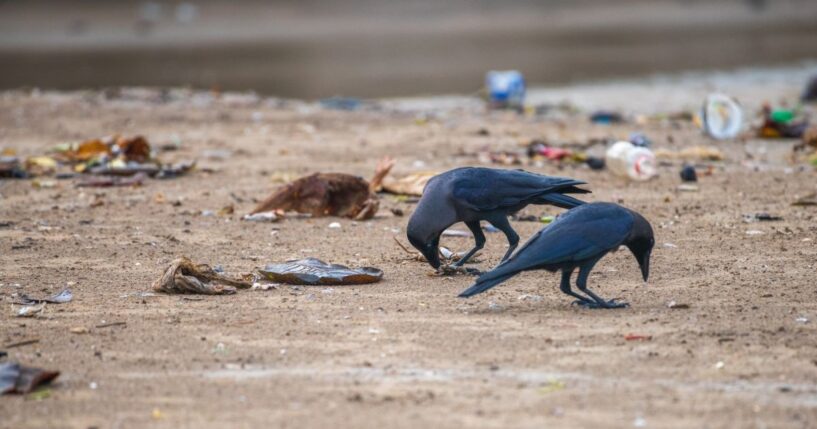
In downtown Prince George, a local crow rescue group has begun using nasal naloxone, which is used to treat opioid overdoses, to heal birds that turn up motionless on the street.
The animals arrive with wings splayed, eyes shut, and heart rates that have dropped significantly. Most regain enough strength to fly off within a day. A few do not.
Vancouver man filmed thrashing wildly on park bench after Canadian province decriminalized drugs… triggering so much narcotic use that even crows were getting high https://t.co/asnhopXeXO
— Daily Mail (@DailyMail) November 2, 2026
The group reported that cases have jumped to over a dozen this year, quite the rise from one or two cases in previous years, according to CBC.
Cases are occurring in the same blocks where open drug use is common. Volunteers believe the birds are ingesting residual opioids that end up in unsecured garbage.
Vancouver man thrashing on bench after province legalized all drugs https://t.co/pz2QGzCWuo via @DailyMail
— Nomad (@johnross27nov1) November 3, 2026
‘…Back in January 2023, British Columbia launched a radical pilot scheme removing criminal penalties for adults possessing small quantities of certain illegal drugs.
Under the scheme, adults could possess up to 2.5 grams of substances including cocaine, heroin, methamphetamine and MDMA for personal use without facing criminal charges.
After a backlash, the restrictions on possession were reinstated in May 2024, though the program only officially ended on January 31, 2026.
Now claims are surfacing that crows have become intoxicated after encountering discarded narcotics in the city.
Good Caws Crow Rescue Society say they have been forced to carry naloxone. The overdose-reversing medication is usually used to save the lives of humans after exposure to opioids, but is now being deployed to save the crows.
— Nomad (@johnross27nov1) November 3, 2026
The incidents are a visible side effect of the experiment British Columbia launched in January 2023.
A federal exemption removed criminal penalties for adults carrying small amounts of opioids, cocaine, methamphetamine, or MDMA.
The stated aim was to treat possession as a health matter rather than a crime, lowering barriers to treatment and reducing overdoses.
Instead, open use became more common in parks, sidewalks, and other public spaces.
Vancouver man filmed thrashing wildly on park bench after Canadian province decriminalized drugs… triggering so much narcotic use that even crows were getting high
🍁 -cdnnews https://t.co/wVKsMhuLb1 https://t.co/BNTqSMNAhX
— ToryNow (@torynowdotcom2) November 2, 2026
British Columbia Premier David Eby later described the result as “a permissive structure” in which using drugs anywhere came to be treated as acceptable. Public possession rules were tightened in 2024, and the pilot program formally expired at the end of January 2026.
Ending the exemption does not reverse the dependency that formed while the rules were looser. People who started or intensified use under the more permissive regime do not automatically stop when penalties return.
The toxic supply, the open-air markets, and the accumulated harm remain, while many died of overdoses throughout the period.
The crows are simply the newest, most visible sign of a street environment still saturated with discarded drugs.
People were filmed convulsing in the park, and claims of intoxicated crows that encountered discarded narcotics in Vancouver after the city briefly legalized cocaine, heroin, meth, and MDMA for personal use without facing criminal charges.
https://t.co/y6WgHGMg4n— Katie Liane (@TheKaterPotater) November 2, 2026
Arguments that treat drug use as a purely private choice overlook the public costs that follow once a critical mass of people becomes dependent.
Disorder, discarded needles, overdoses, and secondary effects on everyone else, including wildlife, become shared problems. Restoring criminal penalties after the fact does not undo the dependency that was allowed to spread.
One of the government’s basic functions is to keep streets, parks, and sidewalks usable for the people who live and work there.
Treating possession of hard drugs as a minor matter while those drugs continue to kill users and spill into the surrounding environment fails that test.
The amount of suffering that could have been avoided is not small.
Families who lost relatives, neighborhoods that watched public spaces deteriorate, and now even birds scavenging downtown garbage are living with the consequences of a policy that prioritized ideological preference over observable results.
British Columbia’s partial retreat shows that reality eventually asserts itself. The difficulty is that the damage done in the meantime does not disappear when the experiment ends.
Advertise with The Western Journal and reach millions of highly engaged readers, while supporting our work. Advertise Today.
Truth and Accuracy
We are committed to truth and accuracy in all of our journalism. Read our editorial standards.