If readers take away only one lesson regarding trade and tariffs, make it the following:
James Madison, father of the U.S. Constitution, believed that the Constitution existed primarily for the purpose of establishing a government strong enough to defend U.S. interests abroad by imposing tariffs on nations that did not reciprocate America’s desire for free trade.
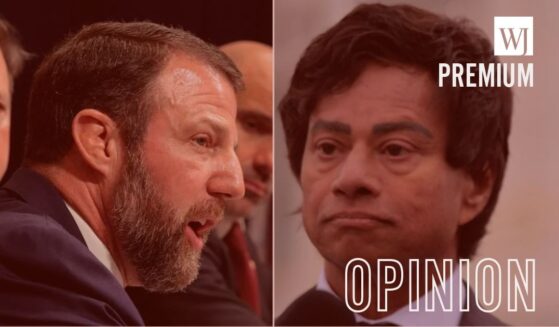
Thus, Vice President J.D. Vance channeled his inner Madisonian hero on Wednesday when, according to Newsweek, the vice president cast the tiebreaking vote to table a Senate resolution — supported by all Democrats and a handful of foolish Republicans, including the well meaning but terribly misguided Republican Sen. Rand Paul of Kentucky — aimed at revoking the emergency order under which, early last month, President Donald Trump enacted his aggressive, beneficial, necessary, and highly constitutional tariff policy for which Americans owe him a debt of gratitude.
Establishment Republican Sens. Susan Collins of Maine and Lisa Murkowski of Alaska also voted for the resolution.
Vance’s heroic vote broke a 49-49 tie. Democratic Sen. Sheldon Whitehouse of Rhode Island and Republican Sen. Mitch McConnell of Kentucky — establishment shills both — did not attend. Had they done so, they presumably would have voted for the resolution.
Now that Vance has slayed that monster, we would do well to consider why the Constitution supports Trump’s tariff policy.
Indeed, for that purpose, we have no more authoritative voice than Madison’s.
Signing you in…
Please keep this page open. The results will appear here.
Check your email to count your vote
We sent a confirmation link to .
Click Confirm Your Vote in that email to count your vote and unlock the results.
Your vote has not been counted yet. If the email hasn't arrived, check your spam or junk folder.
On Apr. 8, 1789 — the very first day of business for the first Congress ever to meet under the new Constitution — Madison introduced a set of resolutions that would have imposed higher tariffs on nations that refused to agree to commercial treaties with the United States than on those that did. The Virginia congressman often referred to his plan as “reciprocity” or “commercial discrimination.”
Keep in mind that Madison made this his first priority for the new government. George Washington had not even taken the Presidential Oath of Office yet.
Then, in a speech delivered 17 days later, Madison explained why, in his view, the U.S. needed discriminatory tariffs. In short, America’s old patron-turned-enemy continued to treat its former colonists with contempt.
“Let us review the policy of Great Britain toward us; has she ever shown any disposition to enter into reciprocal regulations?” Madison asked in a House speech on Apr. 25, 1789. “Has she not by a temporising policy plainly declared that until we are able and willing to do justice to ourselves, she will shut us out from her ports and make us tributary to her? Have we not seen her taking one legislative step after another to destroy our commerce?”
Moments later, Madison argued that reciprocal tariffs represented the primary justification for the Constitution in the first place.
“If we remain in a state of apathy,” Madison declared, “we do not fulfill the object of our appointment; most of the states in the union have, in some shape or other, shown symptoms of disapprobation of British policy; those states have now relinquished the power of continuing their systems, but under an impression that a more efficient government would effectually support their views.”
According to Madison, reciprocal and discriminatory tariffs constituted the object of the new government.
Later in the same speech, the father of the Constitution explained why the U.S. needed such tariffs against Great Britain.
“Adventitious causes have drawn within the commercial vortex of her policy almost all the trade of America, and the productions of the most distant clime, consumed among us, are tributary to her revenue; as long therefore as we do not protect ourselves and endeavor to restore the stream of commerce to its natural channel, we shall find no relaxation on the part of Britain, the same obnoxious policy will be pursued while we submissively bear the oppression,” he said.
Now, in the modern world, replace Britain with China or some other nation that benefits disproportionately from trade with America.
In that case, would Madison encourage us to “protect ourselves”? Would he not view reciprocal tariffs as a path to free trade and commercial agreements, one that would “restore the stream of commerce to its natural channel”?
Furthermore, would Madison have any doubt about the constitutionality of Trump’s tariffs?
Let the father of the Constitution answer those questions in his own words.
In the meantime, we may thank Vance for giving us a much-needed Madisonian moment.