As the Hearing Wraps, Let's Remember Charlie Kirk for the Modern-Day Thomas Paine That He Was

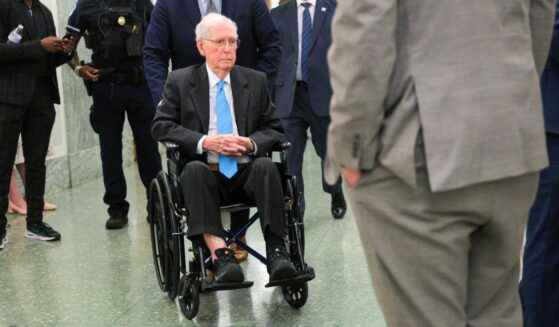
Friday marked the 10-month anniversary of Charlie Kirk’s assassination, and it was also the end of a series of preliminary hearings, at least for now, which will determine if the accused killer’s case will go to trial.
The evidence against Tyler Robinson appeared overwhelming, but while Erika Kirk and the rest of Kirk’s family and friends want justice served, they also want to see his legacy carried on.
Kirk was a Thomas Paine for our time — in other words, a cultural leader outside of government who truly shifted American society back toward liberty, and in the case of Charlie, back toward God.
This week, as the preliminary hearing rolls on and we’re all forced to relive his tragic murder, I find myself wanting to remember Charlie’s incredible life. Our team put this CK tribute together, and they did a great job. I hope you’ll watch it. pic.twitter.com/Z7EOJ9PZpT
— Andrew Kolvet (@AndrewKolvet) July 8, 2026
As I chronicle in the new edition of my book, “We Hold These Truths: The Two Beliefs That Still Hold the Power to Transform the Nation and the World,” Kirk said just months before he died, “If I’m to be known for anything, I want to be known for being courageous for my faith.” I argue that he, like Paine and other cultural leaders I wrote about, such as Frederick Douglass, Julia Ward Howe, and Frank Capra, helped shape the political dialogue of his time.
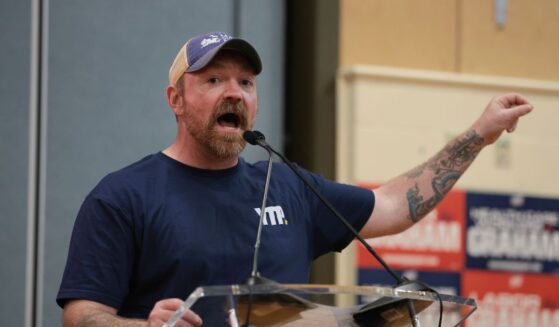
Evidence of Kirk’s enduring impact on culture could be seen on Friday at Turning Point USA’s Chapter Leadership Summit, happening in Washington, D.C., with over 2,500 in attendance, according to the organizers.
TPUSA’s Andrew Kolvet shared a video from the summit with footage of Kirk playing to the audience, talking about the early days of the group.
I just arrived at Chapter Leadership Summit 2026 and it’s an amazing sight to take in. Thousands of student leaders from across the country carrying on the mission Charlie started. God bless them.
🇺🇸🇺🇸 pic.twitter.com/TjZYcLptBw
— Andrew Kolvet (@AndrewKolvet) July 10, 2026
I was able to witness some of the earlier years of the organization as a reporter for The Western Journal. Turning Point USA always had an exhibit at CPAC, and I arranged to interview Kirk multiple times. During our Facebook Live back-and-forths, he was surrounded by college-aged kids wearing swag with messages like “Socialism Sucks” and “Big Government Sucks.”
I spoke to him specifically on the subject of socialism for a news story that I wrote in early 2020, following the release of a poll showing that seven in 10 millennials would be inclined to vote for a socialist candidate.
Kirk recounted to me that he found two questions to be effective in disabusing younger Americans of their starry-eyed view of socialism.
“You ask the question to a student, ‘Do you trust the government?’ Traditionally, their answer will be, ‘No, I don’t trust the government. The government’s horrible,’” he said.
“You ask the next question, ‘Then why do you want to make government bigger?’ ‘Well, I don’t want to make government bigger,’” is the normal response, Kirk explained. “Then you’re not a socialist,” he informed the person. It took him about 15 seconds for the entire back-and-forth.
Also in the book and a recent Western Journal podcast, I made the direct comparison of Charlie Kirk to Thomas Paine.
Many people might not realize that Paine in “Common Sense,” which was published in January 1776, cited the Bible multiple times in his argument about why the American colonies should declare their independence from Great Britain.
Regarding being governed by a king, he wrote, “As the exalting one man so greatly above the rest cannot be justified on the equal rights of nature, so neither can it be defended on the authority of Scripture for the will of the Almighty, as declared by Gideon and the prophet Samuel, expressly disapproves of government by kings.”
Paine had thus appealed to both the “laws of nature and Nature’s God,” as Thomas Jefferson would do a few months later in the Declaration of Independence.
The pamphleteer advocated that, instead of being subject to the arbitrary whims of royal decree, the colonists should be subject to God and His eternal laws. “But where, say some, is the king of America? I tell you, Friend, he reigns above, and doth not make havoc of mankind like the royal brute of Britain.”
“Yet that we may not appear to be defective even in earthly honors, let a day be solemnly set apart for proclaiming the charter [creating a new government for America]; let it be brought forth based on divine law, the Word of God [the Bible]; let a crown be placed thereon, by which the world may know, that so far as we approve of monarchy, that in America THE LAW IS KING. For as in absolute governments the king is law, so in free countries the law ought to be King; and there ought to be no other.”
“Common Sense” sold 125,000 copies in the first three months after its release and 500,000 by the end of the Revolutionary War. For a nation of no more than four million at the time, those are some pretty impressive numbers. The pamphlet is still in print to this day.
My new book, “We Hold These Truths: The Two Beliefs That Still Hold the Power to Transform the Nation and the World,” is out, and it could not be more timely with #America250 and the rise of socialism. The book hits key moments in US history from the founding to today!… pic.twitter.com/Ot0pWyKcag
— Randy DeSoto (@RandyDeSoto) June 25, 2026
In today’s parlance, we would call that going viral, which is what Kirk also did with millions of social media followers and “The Charlie Kirk Show.”
He consistently advanced the kind of God and country arguments Paine made. For example, speaking at a Phoenix-area church over the Fourth of July weekend last year, Kirk said, “My favorite part of the entire Declaration is the end, because the end shows what type of nation we are.”
He contended that the Founders entered into a biblical-style covenant — meaning not just between themselves, but before God — by appealing to the “Supreme Judge of the world.”
The 56 signers closed, “And for the support of this Declaration, with a firm reliance on the protection of divine Providence, we mutually pledge to each other our Lives, our Fortunes and our sacred Honor.”
Paine, in the first of his American Crisis essays, published in December 1776, famously wrote, “These are the times that try men’s souls. The summer soldier and the sunshine patriot will, in this crisis, shrink from the service of their country; but he that stands by it now, deserves the love and thanks of man and woman.”
“Tyranny, like hell, is not easily conquered; yet we have this consolation with us, that the harder the conflict, the more glorious the triumph. What we obtain too cheap, we esteem too lightly; it is dearness only that gives every thing its value. Heaven knows how to put a proper price upon its goods; and it would be strange indeed if so celestial an article as FREEDOM should not be highly rated.”
TPUSA shared a clip on Thursday of Kirk similarly exhorting that we should follow “God’s commands against the culture, not in consistency with the culture.”
“To stand, in my opinion, on eternal truths, fight for the country, fight for our civilization, and then also understand that you, especially as men, but women as well, you are obligated to do difficult and hard things.”
Build for eternity, not just today. pic.twitter.com/FWoESunTAU
— Turning Point USA (@TPUSA) July 9, 2026
Charlie Kirk was definitely a Thomas Paine for our time.
Advertise with The Western Journal and reach millions of highly engaged readers, while supporting our work. Advertise Today.
Truth and Accuracy
We are committed to truth and accuracy in all of our journalism. Read our editorial standards.